
Writing
At the heart of writing is our focus on oracy skills as detailed above and the important relationship between spoken and written language. Through modelling, class discussions and collaboration, oral skills are developed as a prerequisite to writing and they are given time to explore how sentences are constructed and manipulated.
As an Infant school, we place a strong focus on securing the foundations for writing, to support children though Key Stage 1 and to prepare them for Key Stage 2 and beyond. This is achieved by doing the basics well and with high expectations.
The content of our Writing curriculum is driven through our Enquiry Learning (non-core subjects) to give meaning and for children to write knowledgeably about a subject. This allows children to think about the mechanics of writing without having to also create the content. Writing units are crafted to meet the needs of the class with the end point in mind. Learning journeys are sequenced, so that children develop their vocabulary, sentence construction and grammar knowledge within a context, while building fluency of transcriptional skills (handwriting, spelling and grammar). Writing is given an audience, to provide a purpose for writing and for children to see themselves as an author.
Developing oracy is at the heart of all subjects, but especially Writing. Children are supported to compose and organise their ideas orally before writing.
In KS1, we implement the 2014 National Curriculum programme of study. The Teaching and learning of writing are experienced through:
- Shared writing. This is the key teaching tools for demonstrating the process of writing. It is used to teach the generation of ideas, grammar and spelling skills, to demonstrate features of layout and presentation and to focus on editing and refining work. The teacher explicitly models teaching points.
- Guided writing. This involves the teacher working intensively with a small group of children. Sessions are used to meet specific objectives and to focus on specific aspects of the writing process. Particular areas are targeted for individual children
- Independent writing. Children are given opportunities to apply skills learned in shared and guided writing across the curriculum in a range of contexts. All writing activities have a purpose and quality is promoted through book-making, publication or presentation to an audience. Independent writing is supported through the use of working walls, dictionaries, word banks, writing frames and phonic and word displays.
Talk for Writing

The principles of Talk for Writing are intertwined through our provision, especially through EYFS and Year 1. Children build their understanding of story structure, language and vocabulary as well as the transcription of writing through the ‘Imitation’ stage. Through the ‘innovative’ stage, children develop their creativity and authorial voice.
Writing in the EYFS
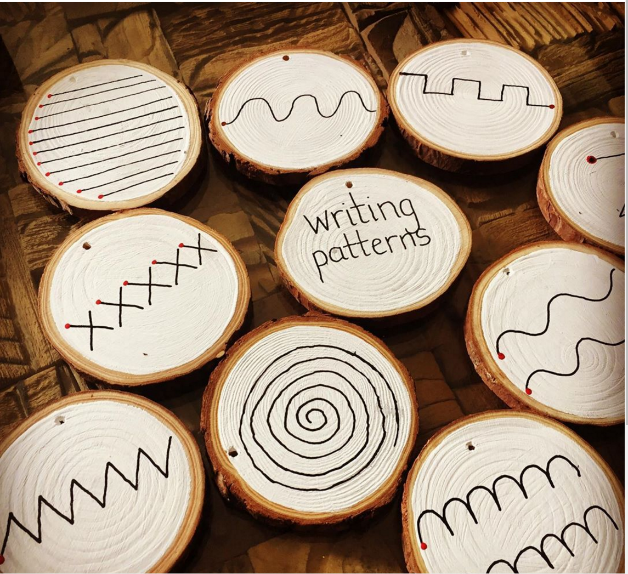
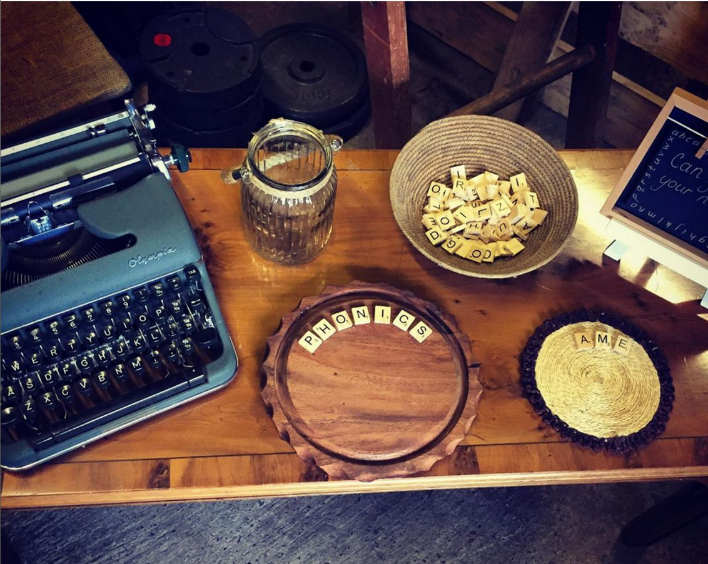
Children experience writing in a range of settings and opportunities for mark-making and developmental writing are available through all areas of learning and throughout the learning environment. The purposes for writing are modelled by practitioners through continuous provision and children’s own attempts at early writing are celebrated and promoted alongside the direct teaching of key skills that will enable the children to progress through the stages of writing development. Securing letter formation and swift recall of graphemes (letters) is the main priority to allow children to feel success when writing. Children's writing is planned and structured to use the sounds/ graphemes learnt in Phonic sessions.